
MoPH Rejection in Qatar: 5 Costly Fixes That Work
MoPH rejection in Qatar explained: why products fail, what to fix, and how reformulation or document changes support resubmission | Product Registration Qatar
BLOGS
3/11/20263 min read
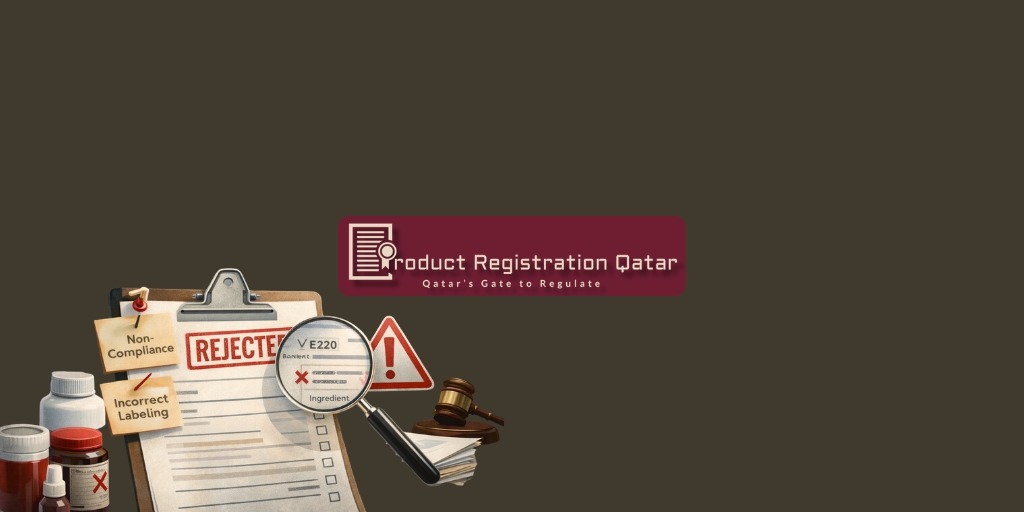
What Happens When a Product Is Rejected by MoPH in Qatar?
Reviewed by: Product Registration Qatar Regulatory Affairs Team – Product Compliance & Market Entry Advisory
Product rejection during the regulatory review stage is one of the most frustrating experiences for importers and manufacturers entering the Qatari market.
Many companies assume rejection means the end of the process. In reality, most rejected submissions can be corrected and successfully resubmitted when the underlying compliance issue is properly identified.
Understanding why rejections happen—and how reformulation or documentation adjustments solve them—helps businesses protect their market entry plans and avoid repeating costly mistakes.
Why Products Get Rejected During Registration
The Ministry of Public Health (MoPH) evaluates products based on safety, labeling accuracy, and regulatory classification. Rejections typically occur when one or more of these elements conflict with the applicable standards.
Common triggers include:
Ingredients that exceed permitted concentration limits
Substances that fall within restricted or prohibited lists
Claims that suggest medical or therapeutic effects
Label inconsistencies between languages or documentation
Product classification conflicts between categories
In many cases, the product itself is not unsafe; the issue lies in how it is formulated, presented, or documented.
Reformulation vs. Documentation Correction
When a rejection occurs, the first step is determining whether the issue is technical or administrative.
Documentation Issues
Some rejections result from mismatches between the label, ingredient list, and certificates. These cases may only require:
Updated label artwork
Corrected ingredient declarations
Revised supporting documentation
Once aligned, the product can often be resubmitted without major changes.
Formulation Issues
Other cases require deeper technical adjustment. Reformulation may be necessary when:
Active ingredients exceed allowed thresholds
Additives are not permitted for the product category
Ingredient combinations create classification conflicts
Reformulation allows the product to remain commercially viable while aligning with regulatory expectations.
Typical Reformulation Adjustments
Companies often assume reformulation means rebuilding the product entirely. In practice, most adjustments are relatively minor.
Examples include:
Reducing the concentration of a restricted ingredient
Replacing an additive with an approved alternative
Adjusting functional claims to match cosmetic or food classifications
Updating preservative systems to meet permitted limits
These adjustments allow the product to meet regulatory thresholds while maintaining its intended function.
How Reclassification Affects Approval
Another common reason for rejection is incorrect product categorization. A product marketed as a cosmetic, for example, may be interpreted as a therapeutic item if its claims imply treatment of a medical condition.
Reclassification often requires:
Revising marketing language
Updating labels
Adjusting documentation
Correct classification helps ensure the product enters the correct regulatory pathway.
The Cost of Ignoring a Rejection
Some companies attempt to ship products despite rejection, hoping customs clearance will proceed. This strategy carries significant risk.
Potential consequences include:
Shipment detention at port
Product return or destruction
Additional storage fees
Distributor hesitation due to compliance concerns
Addressing the rejection properly is usually faster and less expensive than attempting to bypass it.
Steps to Recover After a Rejection
When a product receives a rejection notice, structured recovery is essential.
A practical response strategy includes:
Reviewing the rejection reason in detail
Identifying whether the issue is formulation, labeling, or classification
Correcting the affected elements
Preparing revised documentation
Submitting a corrected file for evaluation
A well-prepared resubmission typically progresses more smoothly than the initial attempt.
Preventing Future Rejections
Most rejection scenarios can be prevented through early compliance validation before submission.
Best practices include:
Reviewing ingredients against regulatory annexes before manufacturing
Validating label artwork and translations early
Ensuring product identity matches across all documents
Assessing claims for regulatory sensitivity
These steps reduce the likelihood of costly delays and repeated submissions.
Turning a Rejection Into a Successful Market Entry
While rejection can initially appear as a setback, many companies ultimately succeed in registering their products after making targeted adjustments.
A clear understanding of regulatory expectations allows brands to correct issues quickly and move forward with confidence.
If your product has been rejected or you want to prevent rejection before submission, contact us or use the chatbot in the bottom-right corner to review your product and compliance readiness.
Read More:
Learn what affects approval speed in our Qatar Product Registration Timeline guide.
See how to avoid shipping problems in Do You Need MoPH Approval Before Importing to Qatar?
Understand common compliance gaps in MoPH Food Registration : Process, Documents & Rejection Risks.
Ingredient compliance checks before MoPH submission help identify restricted substances and reduce approval delays.
Explore our Qatar product registration FAQs to avoid delays and common submission errors.
Ready to Ensure Your Product is Fully Compliant?
Fill out the form below and let our experts guide you through label checks, formula validation, and registration—step by step.
